 Embedded Development
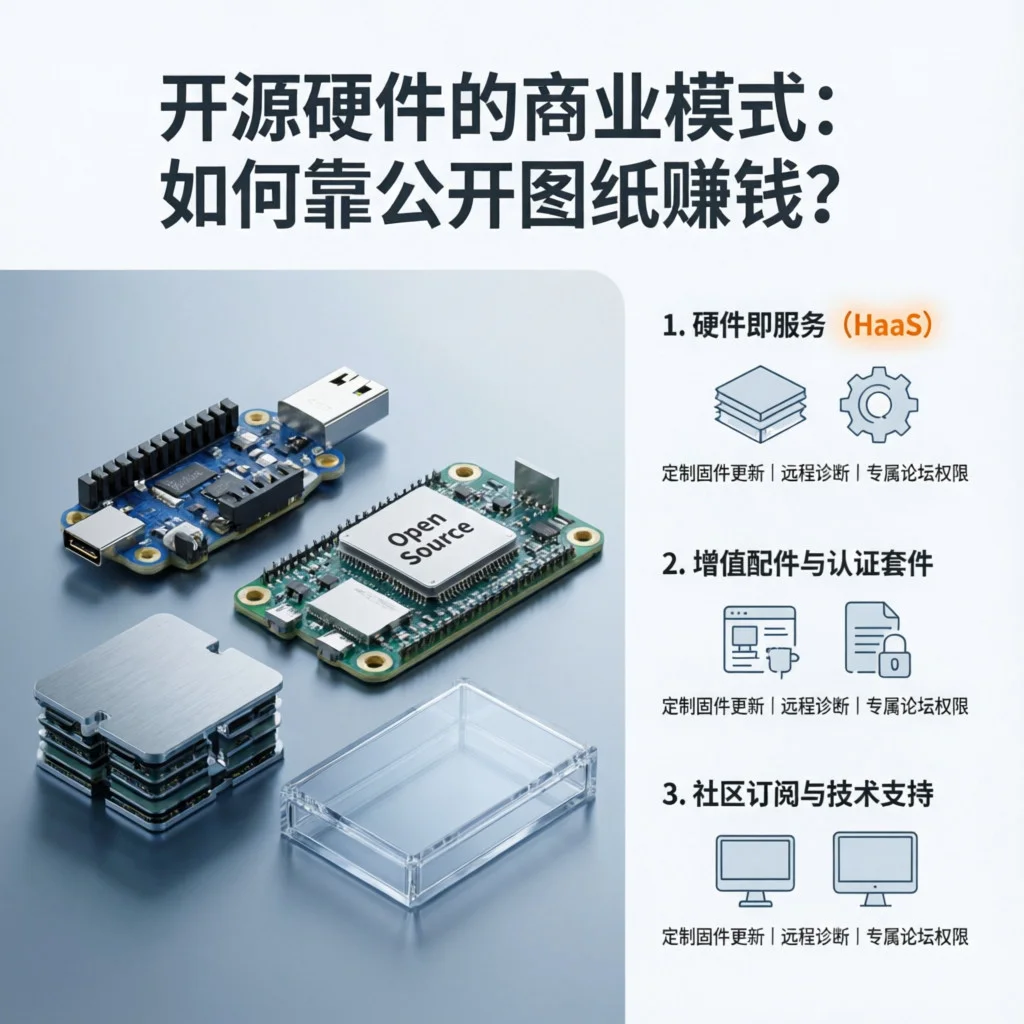
 Open Source Hardware Business Model: How to Make Money by Publishing Blueprints?
After years of hardware development, I’m often asked: “You’ve published the schematics and code, others can just copy them, how do you make money?”
This is indeed a good question. Today we’ll talk about the business model of open source hardware - this business that sounds a bit “counterintuitive”, how it actually works.
Let’s Get to the Conclusion First: Open Source Hardware Can Make Money, and Can Make Big Money
Don’t be fooled by the word “open source”. Open source doesn’t mean free, and certainly doesn’t mean charity. Look at these numbers:
- Arduino: Revenue exceeded 30 million US dollars in 2023, with millions of units shipped globally
- Raspberry Pi: Cumulative sales exceed 50 million units, becoming the best-selling “computer”
- Openterface: Continued shipping after successful crowdfunding, with 2000+ stars on GitHub
These projects have all open-sourced their schematics, firmware, and software completely, but the companies are doing well, even thriving. Why?
5 Profit Models for Open Source Hardware
Model 1: Selling the Hardware Itself (Most Direct)
Core Logic: Open source attracts users → Users buy official/certified hardware → Scale effect reduces costs
Typical Case: Arduino
Arduino puts all design files on GitHub, anyone can produce Arduino boards themselves. In fact, there are indeed a large number of “compatible boards” on the market, with prices only 1/3 of the official ones.
So how does Arduino make money?
- Brand Trust: Educational markets and enterprise customers prefer to buy official genuine products, with quality assurance
- Scale Effect: Official shipments are large, procurement costs are lower, profit margins are actually larger
- Ecosystem Binding: Arduino IDE, official libraries, and tutorials are all optimized around official hardware
My Experience: When doing open source hardware, don’t be afraid of others copying. What can be copied are just the blueprints, what cannot be copied is brand trust, supply chain capabilities, and user community.
Model 2: Selling “Peace of Mind” (Technical Services)
Core Logic: Hardware free/low price → Charge technical service fees → Enterprise customers willing to pay
Typical Case: BeagleBoard
BeagleBoard has open-sourced all designs, but many companies are still willing to pay big money to hire them for custom development. Why?
- Making it yourself from the blueprints? Sure, but it takes time to debug and encounter pitfalls
- Buying technical services directly? Worry-free, quick to market
Who It’s Suitable For: Teams with deep technical accumulation, who can turn “pitfalls encountered” into service products.
Model 3: Selling Ecosystem (Software/Cloud Services)
Core Logic: Hardware doesn’t make money → Software/cloud services charge → Continuous revenue
Typical Case: Particle
Particle’s IoT development boards are not expensive, but their cloud platform charges quite a bit:
- Device management
- Data analysis
- OTA upgrades
- Security services
Hardware is just the entrance, the real profit is in software and services.
My Thinking: This model is suitable for companies with software teams. Pure hardware teams should be cautious, don’t treat things you’re not good at as core business.
Model 4: Selling “Early” (Crowdfunding + Pre-sale)
Core Logic: Open source attracts attention → Crowdfunding pre-sale → Use user funds for production → Reduce inventory risk
Typical Case: Openterface
Openterface is a good example:
- First open source the project on GitHub, accumulate technical reputation
- Launch crowdfunding, attract supporters with “open source + transparency”
- Use crowdfunding funds for production, no inventory pressure
- Continuous iteration, keep the community active
Advantages: Healthy cash flow, no “inventory pressure” risk of traditional hardware startups.
Model 5: Selling “Fame” (Consulting + Speaking + Training)
Core Logic: Open source projects establish personal/company brand → Brand monetization
Typical Case: Numerous Open Source Hardware Entrepreneurs
I know many friends doing open source hardware, whose main sources of income are:
- Enterprise consulting (helping companies with selection, architecture design)
- Technical speaking (conference appearance fees)
- Training courses (online/offline)
- Publishing books (royalties)
Who It’s Suitable For: Technical people who are good at expressing and have personal brand awareness.
”Pitfalls” of Open Source Hardware: Several I’ve Stepped In
After doing open source hardware for these years, I’ve also stepped into quite a few pitfalls. Sharing several hard-learned lessons:
Pitfall 1: Open Source Doesn’t Mean No One Manages It
Wrong Thinking: “After open sourcing, I can be a hands-off boss”
Reality: Open source projects require more maintenance work
- GitHub Issues need replies
- PRs need review
- Community questions need answers
- Documentation needs continuous updates
Suggestion: Think clearly before open sourcing, do you have the time and energy to maintain the community.
Pitfall 2: Pricing Too Low to Survive
Wrong Thinking: “Open source means it should be cheap, 20% lower than others”
Reality: Price wars have no winners
I’ve seen too many open source hardware projects, to compete with “compatible boards”, continuously lowering prices, until profits are so thin they can’t support R&D, and gradually disappear.
Suggestion: Pricing should cover costs + reasonable profit + R&D budget. Believe that users willing to support open source won’t buy knockoffs just to save 20 yuan.
Pitfall 3: Neglecting Supply Chain
Wrong Thinking: “After the design is done, it can be produced”
Reality: Supply chain is the biggest threshold for hardware startups
- Component procurement cycles
- Factory capacity scheduling
- Quality control
- Logistics distribution
These are not things open source can solve, requiring solid investment.
Suggestion: Find a partner with supply chain experience, or reserve enough time to learn.
Advice for Those Wanting to Enter the Field
If you’re also considering doing open source hardware, my advice is:
1. First Think Clearly “Why Open Source”
- Is it to attract users?
- Is it to establish technical reputation?
- Do you truly believe in the open source philosophy?
Different motivations lead to different strategies.
2. Choose the Right Track
Suitable for Open Source:
- Development boards/tools (users are developers, understand open source)
- IoT devices (need software ecosystem)
- Educational products (schools like open source)
Be Cautious About Open Sourcing:
- Consumer electronics (ordinary users don’t care about open source)
- Highly competitive red ocean markets (price wars are brutal)
3: Prepare for the Long Term
Open source hardware is not a quick business. Building community, accumulating reputation, and polishing products all take time.
Psychological Expectation: Prepare at least 18-24 months of financial reserves.
Conclusion: Open Source is a Strategy, Not a Purpose
Returning to the original question: “How does open source hardware make money?”
The answer is: Open source itself doesn’t make money, but open source can help you make money.
It’s a customer acquisition strategy, a brand building method, a means to reduce R&D costs. But in the final analysis, you still need to provide valuable products or services for users to be willing to pay.
What Arduino sells is not “open source circuit boards”, but “the easiest development platform to get started with”.
What Raspberry Pi sells is not “open source designs”, but “the most affordable educational computer”.
What Openterface sells is not “public KVM solutions”, but “the most user-friendly remote debugging tool”.
Think clearly about what you’re selling, then decide whether to open source, and how to open source.
Hope this blog post is helpful to you!
Related Resources: