 Electronics
 Understanding IP Ratings: IPX4, IPX8, IP68 Explained
Introduction
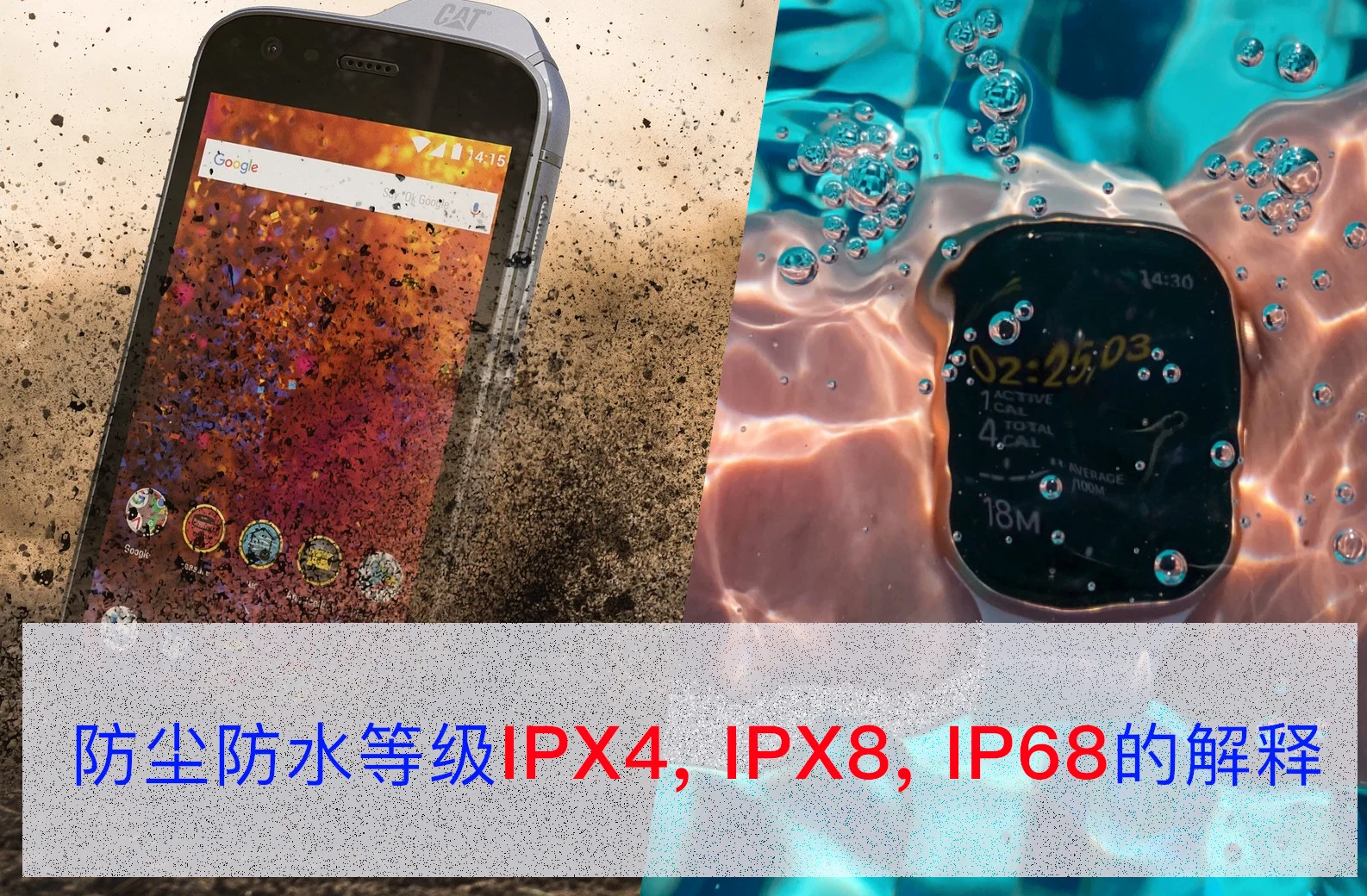
IP code is an international standard used to evaluate a product’s protection against water or foreign object intrusion. When helping customers design products, we often mention the product’s waterproof rating, so it’s necessary to provide an explanation of IP codes.
IP code is an IEC (International Electrotechnical Commission) standard, which is why you can also see IP codes on smartphones, cameras, and other products. This standard provides consumers with a way to see through vague marketing terms and understand the degree of protection for a given product.
Code Explanation
IPX4 is an IP code or ingress protection marking. It’s a classification standard used to rate the level of protection against intrusion.
An IP code consists of the IP identifier and two numbers describing the protection level.
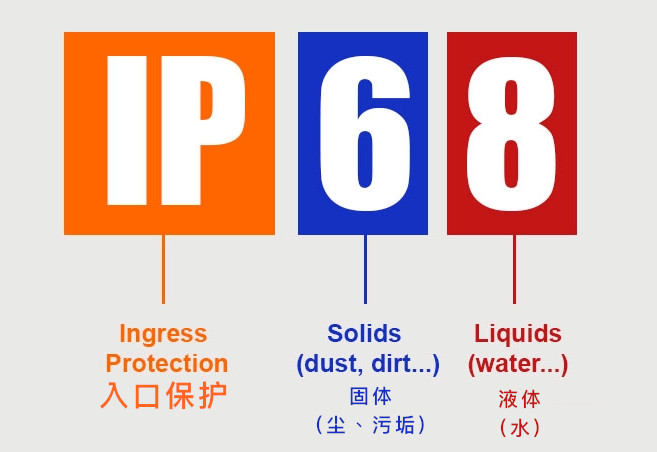 – The first two letters “IP” indicate it’s an IP code
– The first digit represents the protection level against solid particles (such as dust)
– The second digit describes the protection level against liquids such as water
– The first two letters “IP” indicate it’s an IP code
– The first digit represents the protection level against solid particles (such as dust)
– The second digit describes the protection level against liquids such as water
If a product claims to achieve IP68 rating, it means:
IP = IP identifier 6 = Dust-tight for the enclosure 8 = The enclosure can be immersed in water up to 1 meter deep
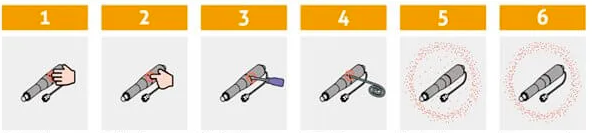
First Digit (Protection Against Solid Particle Intrusion)
| Rating | Protection Level | Example |
|---|---|---|
| X | Not tested | |
| 0 | No protection | |
| 1 | Objects larger than 50 mm | Back of hand |
| 2 | Objects larger than 12.5 mm | Fingers |
| 3 | Objects larger than 2.5 mm | Screwdrivers |
| 4 | Objects larger than 1 mm | Wires |
| 5 | Dust protected | No interfaces |
| 6 | Dust tight | Dust |
Second Digit (Protection Against Liquid Intrusion)

| Rating | Protection Level | Example |
|---|---|---|
| X | Not tested | |
| 0 | No protection | |
| 1 | Protection against dripping water | Rain drops |
| 2 | Protection against dripping water when tilted 15° | Rain at 15 degrees |
| 3 | Protection against sprayed water | Rain at 60 degrees |
| 4 | Protection against splashed water | Splashing from any direction |
| 5 | Protection against water jets | Water jet |
| 6 | Protection against powerful water jets | Powerful water jet |
| 7 | Protection against immersion up to 1 meter | Immersion 15cm-100cm |
| 8 | Protection against continuous immersion, 1 meter or more | Immersion greater than 100cm |
Complete IP Rating Details
Above we briefly introduced the meaning of the two digits. Below is the complete protection rating table.
Complete Table for First Digit (Dust Protection Rating)
| IP Code First Digit | Protection Level | Detailed Description |
|---|---|---|
| 0 | No protection | No special protection |
| 1 | Protection against objects >50mm | Back of hand, large tools, etc. |
| 2 | Protection against objects >12.5mm | Fingers, small tools, etc. |
| 3 | Protection against objects >2.5mm | Screwdrivers, thick wires, etc. |
| 4 | Protection against objects >1.0mm | Thin wires, small screws, etc. |
| 5 | Dust protected | Cannot completely prevent dust entry, but not enough to affect normal operation |
| 6 | Dust tight | Completely prevents dust entry, tested in vacuum environment |
Complete Table for Second Digit (Water Protection Rating)
| IP Code Second Digit | Protection Level | Detailed Description | Test Method |
|---|---|---|---|
| 0 | No protection | No special protection | - |
| 1 | Drip protection | Vertical drips have no effect | Drip test for 10 minutes |
| 2 | 15° tilt drip protection | Drips have no effect when tilted 15° | Four-angle drip test |
| 3 | Spray protection | Spray within 60° of vertical has no effect | Spray test, 10L/min, 5 minutes |
| 4 | Splash protection | Splashing from any direction has no effect | Oscillating spray, 10L/min, 10 minutes |
| 5 | Jet protection | Water jets from any direction have no effect | 6.3mm nozzle, 12.5L/min, 3 minutes |
| 6 | Powerful jet protection | Powerful water jets from any direction have no effect | 12.5mm nozzle, 100L/min, 3 minutes |
| 7 | Temporary immersion protection | Immersion in 15cm-1m water, no effect within 30 minutes | Pool immersion, 1m depth, 30 minutes |
| 8 | Continuous immersion protection | No effect from continuous immersion at specified depth (depth and time defined by manufacturer) | Manufacturer-specified conditions, typically >1m depth |
| 9K | High-temperature high-pressure jet protection | High-temperature high-pressure cleaning has no effect | 80°C water, 80-100bar, 14-16L/min |
Actual Testing Methods Revealed
Many people are curious about how manufacturers test IP ratings. Here’s a brief introduction to common testing methods:
Dust protection test: The product is placed in a dust test chamber containing talcum powder dust at a specified concentration. The test lasts for 8 hours. After the test, the product is checked for dust ingress and whether the amount affects normal operation.
Water protection test (IPX1-IPX6): Specialized spray/splash test equipment is used to spray the product surface according to specified water flow, water pressure, and angle. The product is then checked for water ingress.
Immersion test (IPX7-IPX8): The product is placed in a water-filled pool and immersed at specified depth and time. The standard condition for IPX7 is immersion in 1 meter of water for 30 minutes. IPX8 conditions are defined by the manufacturer and are typically more stringent.
High-temperature high-pressure test (IPX9K): 80°C hot water is sprayed at the product at close range with 80-100bar pressure and 14-16L/min flow rate. This test is mainly used for automotive and industrial equipment.
Real-World Application Cases
Smartphones
- iPhone 15 series: IP68 (completely dust-tight, can stay in 6 meters of water for 30 minutes)
- Most mid-range phones: IP54 (dust protection level 5, splash protection level 4)
- Rugged phones (such as CAT S series): IP68/IP69K
Outdoor Sensors
- Weather station temperature/humidity sensors: Typically IP65 or IP66, need rain protection but not immersion
- Water level sensors: Need IP68 because they’re continuously immersed in water
- Soil moisture sensors: Recommend IP67 or above, occasionally submerged by rain
Sports/Outdoor Equipment
- Smartwatches: Typically IPX7 or IPX8 (can be worn while swimming)
- Sports headphones: Typically IPX4 or IPX5 (sweat and light rain resistant)
- Dashcams: Recommend IP67 or above (outdoor installation requires high temperature and rain resistance)
Industrial Equipment
- Outdoor LED lights: Typically IP65 (rain protection)
- Underwater cameras: Need IP68 (specific rating depends on water depth)
- Food processing equipment: Typically need IP69K (high-temperature high-pressure cleaning resistant)
How to Choose the Right IP Rating for Your Project
When designing products, choosing the appropriate IP rating requires balancing protection needs and cost:
| Application Scenario | Recommended Minimum IP Rating | Description |
|---|---|---|
| Indoor desktop equipment | IP20 | Only need finger touch protection |
| Indoor kitchen equipment | IP44 | Splash protection is sufficient |
| Outdoor fixed installation | IP65 | Rain and dust protection |
| Outdoor portable equipment | IP67 | May fall into water |
| Underwater equipment | IP68 | Continuous water immersion |
| Food processing/medical equipment | IP69K | Requires high-temperature high-pressure cleaning |
Important reminder: The higher the IP rating, the more complex the product’s sealing design, and costs will increase significantly. You should choose the minimum rating that meets actual usage requirements rather than blindly pursuing the highest rating.
Also note that IP rating tests are conducted under laboratory standard conditions. In actual use, product aging, temperature changes, mechanical shocks, and other factors may reduce protection performance. Therefore, it’s recommended to leave some margin when designing products.